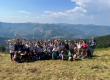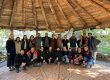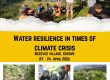
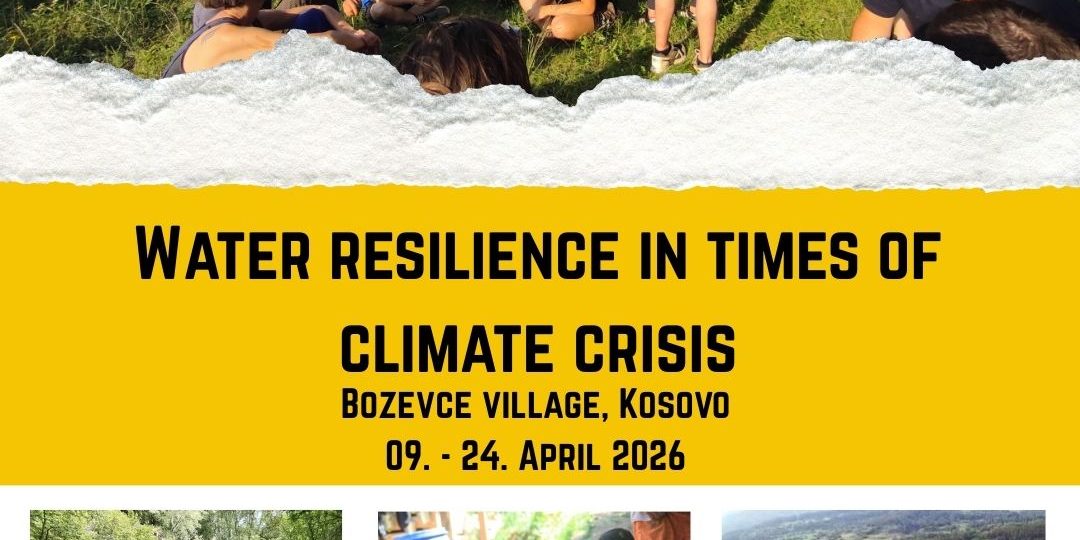
In April 2026, the GAIA team in Bozevce welcomed a diverse team of 16 volunteers, including volunteers from France, Germany, Belgium, as well as locals from Kosovo. The workshop, focused on water management design, kicked off with an overview of permaculture theory, a design system for understanding and creating sustainable and healthy habitats for humans, animals, and plant life. The theoretical overview provided by the GAIA team explained the foundational ethics of permaculture, such as ‘People-Care’ and ‘Earth-Care’. These principles emphasized the maintenance of regenerative, supportive, and collaborative natural systems including both social and community structures as well as ecosystems of soils, forests, and water.
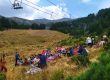
The team then set off to put these principles into action, learning and practicing various water management techniques such as reedbedding, a natural method to cleanse both gray and black water (dirty water from household activities). Across the 2 weeks volunteers learned the practical application of reedbeds, digging new pathways for dirty water to flow into, and planting reedbeds to absorb and cleanse the water creating a closed loop system to maximize sustainability and minimize waste. Building on the principles of water management, volunteers also worked to create ‘swales’ across the property in Bozevce. Volunteers worked to measure and design small semi-circle shaped spaces at the base of trees to collect excess water flowing downhill. These spaces, called swales, allow the water to pool and seep into the soil containing the roots of trees keeping water run-off in the system.
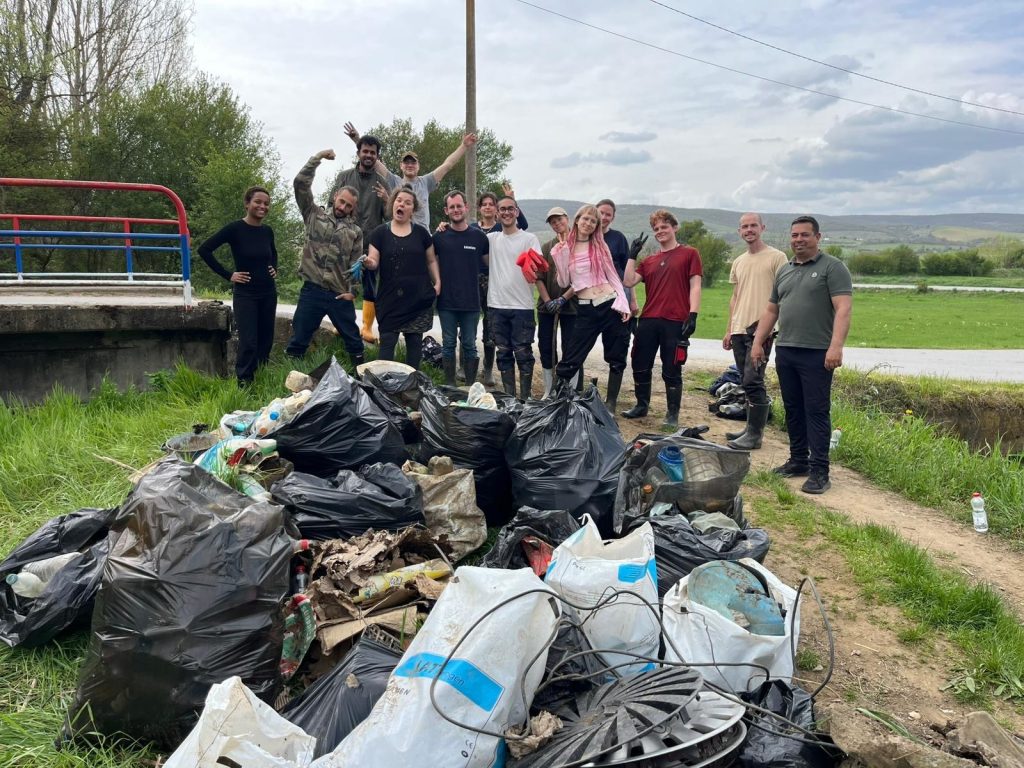
The water management workshop culminated in a clean up action on the Morava river in Ranilug. Over the course of several days volunteers and coordinators worked together to collect trash and plastic collected along the river in Ranilug, finishing with over 100 bags of trash removed from the river ecosystem.
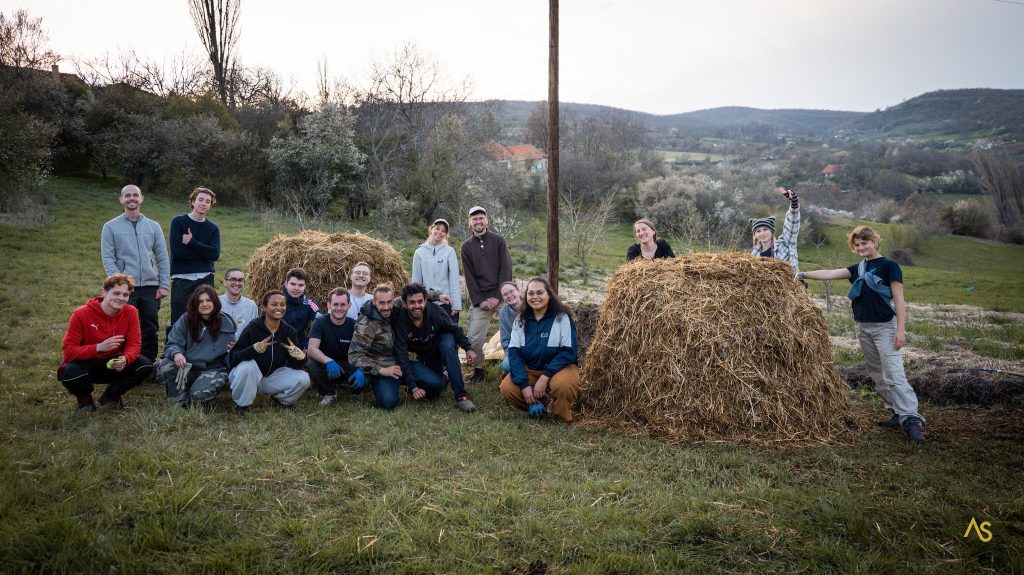
The daily activities at Bozevce went beyond just water management as volunteers worked to put permaculture design into practice in a variety of fun ways. At the start of the 2 weeks volunteers divided into 2 teams to create competing thermal compost heaps, with each group creating a cylindrical shaped compost heap by layering manure, grass, hay, and sawdust. Over the course of the workshop volunteers continually monitored the health of their compost, checking the internal temperature of the compost and ‘flipping'(moving the outer material to the inside) the heap multiple times a week. In this way volunteers gained practical experience in creating and maintaining a sustainable agricultural practice, growing
and working alongside a ‘living’ compost system. Day to day volunteers also learned to prepare potato beds for the upcoming planting season, and improved the fences surrounding the upper gardens and geese and chicken coops.
Beyond solely ecological permaculture design, volunteer also dove in to applying the principles to community and social life. Foreign volunteers got the opportunity to meet and exchange with local culture, playing an intense match of football against local’s from Rajanovce village, and visiting neighbors to learn about life and agricultural practices in the village of Bozevce.
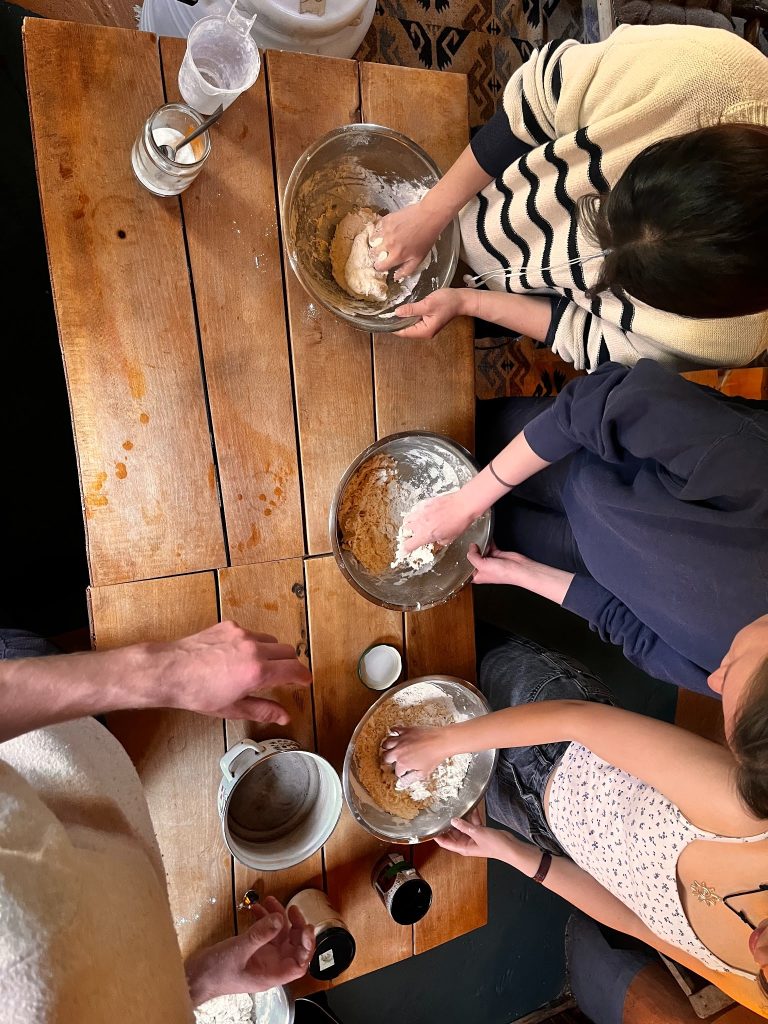
Volunteers also alternated daily preparing home made vegetarian meals, getting the opportunity to try locally made cheese and milk and regional classics like Pita and Turshia.
The purpose of this activity was to bring together a diverse group of volunteers from across Europe to learn about water management design, and grow together in a supportive sustainable environment. Across the two weeks the volunteers learned about the theoretical foundations of permaculture and water management, while also gaining practical experience working in a sustainable eco-friendly environment.